

Key takeaways
Ninety-five percent of analysed AI pilots failed to deliver a measurable financial return. That figure comes from Asyar’s review of AI adoption challenges in Saudi Arabia, which cites Deloitte and MIT NANDA. The same review says more than 80% of Middle East organisations feel pressure to adopt AI. Both numbers are worth knowing before you hire an AI development company in Saudi Arabia.
High pressure and a low success rate make an expensive combination. If you are shortlisting AI partners this year, the useful question is not “which chatbot should we buy?” It is “what would put our project among the few that pay back?”
Asyar reports that data preparation consumes 60–80% of project resources. Teams budget for the model, then find the real work sits in the documents, spreadsheets and policies behind it. Skip that step and the pilot works in the demo and breaks on real cases.
A pilot run for no one in particular has no one to defend it when budgets tighten. It needs a business owner with a number attached: hours saved, leads qualified, transactions tested.
A chat window in a separate browser tab is not a workflow. If people must leave their ERP, EHR or Microsoft Teams to use the AI, most will not bother.
The Asyar review states that PDPL alignment is mandatory for personal data. So before anyone debates model quality, ask where the model runs and where your data goes when someone types a question into it.
With a rented, general-purpose service, the vendor sets the answer. With a private model, you do. There are three options to put in front of your legal and security teams:
H&H Technology deploys in all three ways, and the client owns the code and the weights. Which option fits is a decision for your compliance team, read against the PDPL and the requirements of your sector.
A generic chatbot knows a little about everything and nothing about your price list. It was never trained on your payment plans, your clinical guidelines or your audit procedures.
A private LLM, or more often a small language model (SLM), works the other way round. H&H’s test is simple: if the rules can be written down, a private model can be trained on them. Inventory, pricing, policies, clinical guidelines and audit procedures all qualify.
Why small? A model that serves one domain does not need to write poetry. It needs to answer from your rules, consistently, and a compact model is easier to host on infrastructure you control.
Then there is ownership. When you rent, the vendor decides the price, the terms and the day the model changes. When you own the code and the weights, the model is your asset.
Saudi customers and staff move between Arabic and English all day. H&H builds Arabic and English voice and chat agents, alongside autonomous multi-agent systems with a human on the loop, and workflow automation. A practical test for any vendor: ask for the demo in Arabic first, on your documents, not theirs.
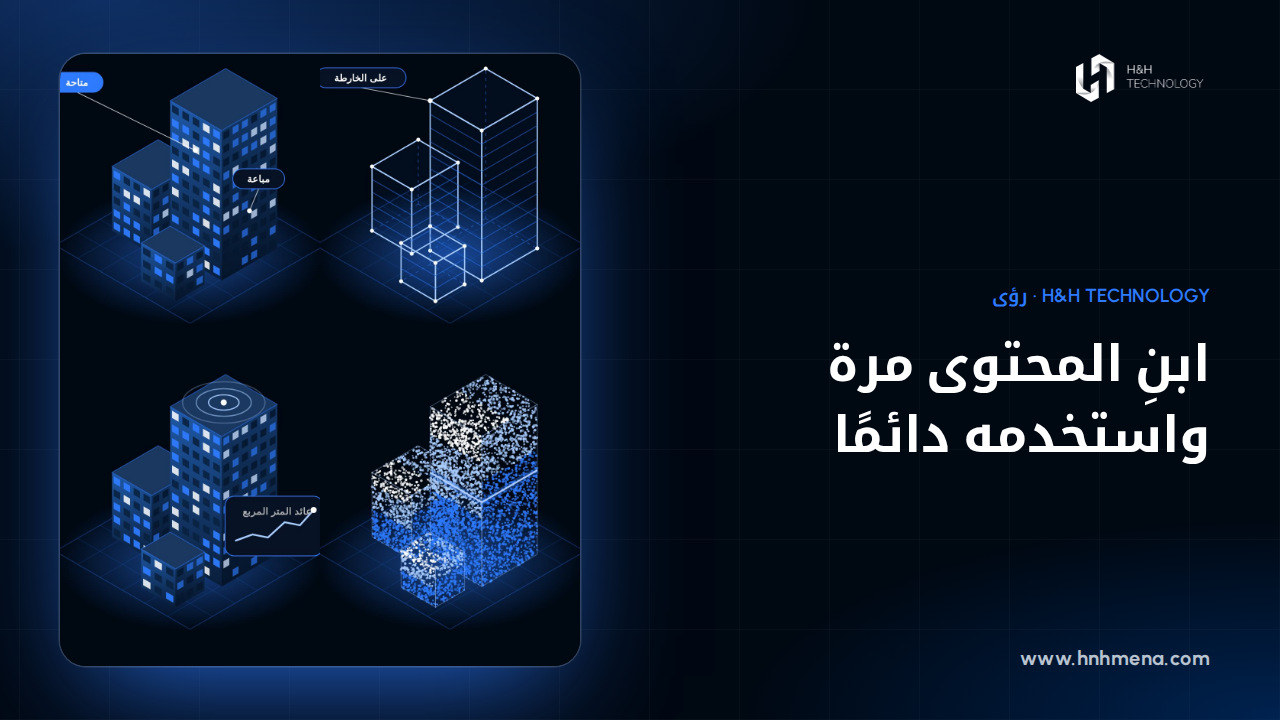
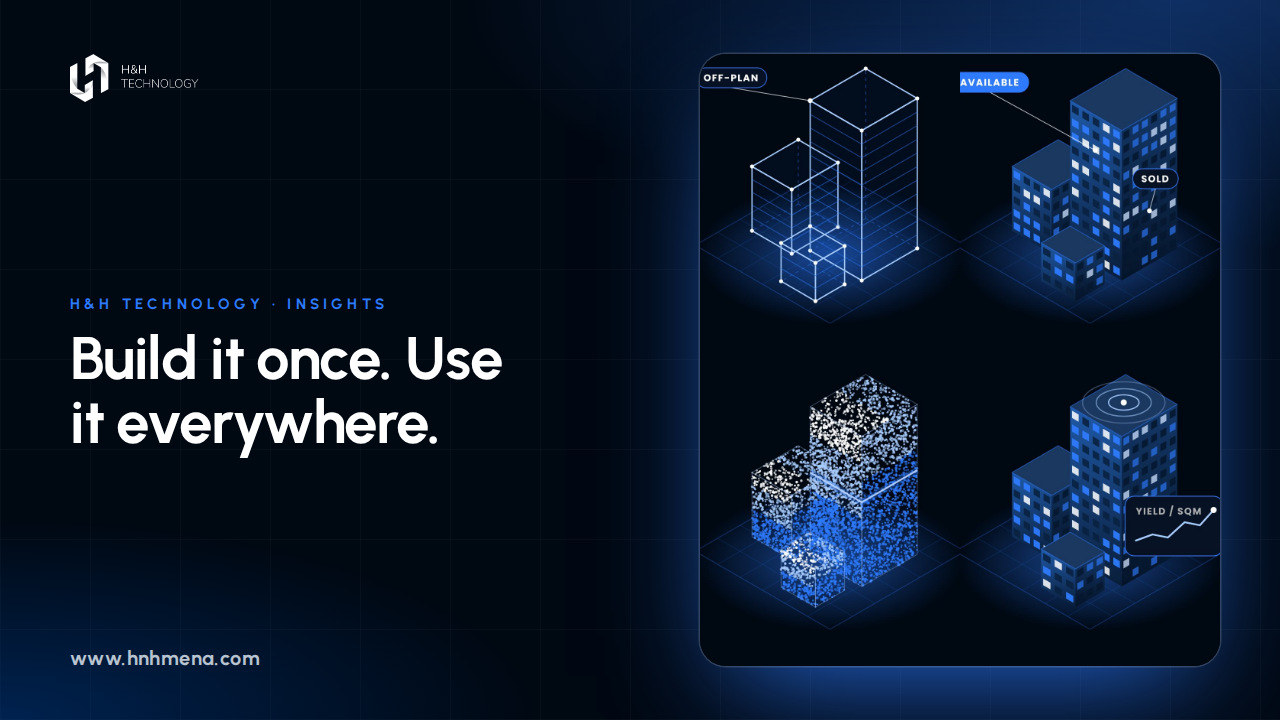
Property is a clear example. H&H’s AI sales agent is an SLM trained on a developer’s full inventory, pricing, payment plans and policies. It answers buyers instantly on the website, the app, WhatsApp and at events, in both languages, around the clock.
It also qualifies leads and hands hot buyers to the human team, so salespeople spend their hours on buyers who are ready to talk. It sits in the SELL stage of the developer journey, next to the website and app.
SINA is a 3.2B-parameter radiology clinical decision support model. It was custom-trained on Royal College of Radiologists guidelines and is integrated into the EHR. It is guideline-grounded and non-diagnostic: it supports the clinician and does not replace the clinician’s judgement.
The Internal Audit LLM runs behind any ERP or inside Microsoft Teams. It expands audit from 5–10% samples to 100% of transactions, and cuts full-population testing effort from 300 hours to 5.
Some organisations need a policy and a roadmap before a model. H&H Vantage is the advisory track:
H&H Forge then builds what the plan calls for.




FAQ
What does an AI development company in Saudi Arabia actually build?
At H&H Technology the work covers custom LLMs and SLMs, autonomous multi-agent systems with a human on the loop, Arabic and English voice and chat agents, and workflow automation. The model is trained on your written rules and placed inside the tools your teams and customers already use.
Does a private LLM make us PDPL compliant?
No model makes an organisation compliant by itself. Asyar notes that PDPL alignment is mandatory for personal data. A private deployment gives you control over where data is processed, whether on-prem, in your own cloud or in-region. Your policies and data handling still need review by your compliance team.
What is the difference between an LLM and an SLM?
An SLM, or small language model, is a compact model trained for a narrow job, such as answering from one developer’s inventory and payment plans. SINA, the radiology decision support model H&H built, has 3.2 billion parameters and works from one body of guidelines.
How long does it take to get started with AI advisory?
AI Compact, the policy step, takes 2–3 weeks. AI Pulse, the readiness diagnostic, takes 3–4 weeks. AI Blueprint, the 90-day and 12-month roadmap, takes 4–6 weeks. Build timelines depend on the workflow you choose and the state of your data.
Related reading
Talk to us about one workflow
Bring one workflow and the rules that govern it. Eajaz Ali, Regional Head at H&H Technology, will tell you plainly whether a private model fits. Message him on WhatsApp at https://wa.me/966504920373, or use the contact section of hnhmena.com.
Sources